What spermidine actually is
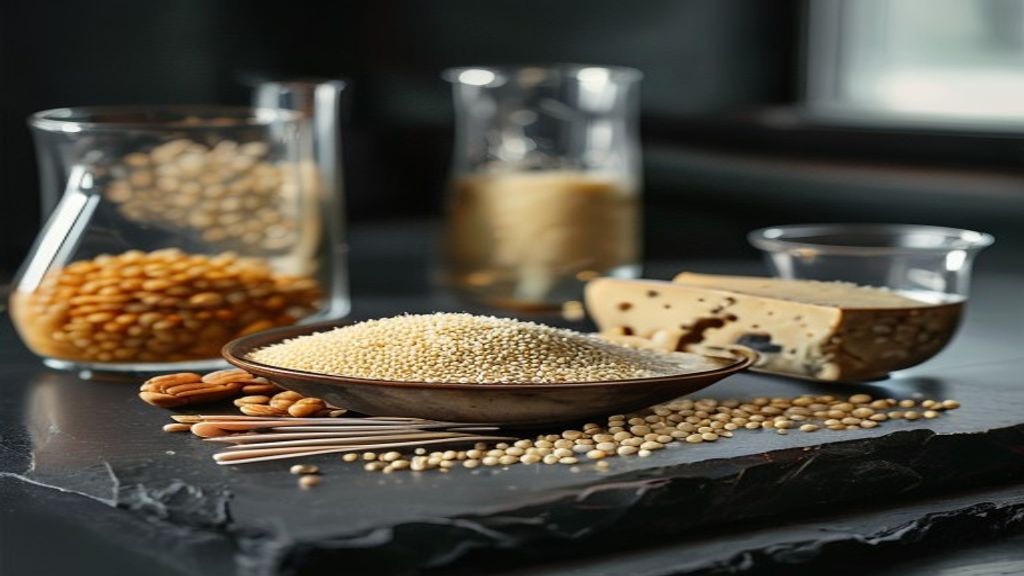
Spermidine is a small, positively charged molecule called a polyamine (chemical formula C7H19N3). It is not exotic: your own cells make it, your gut bacteria produce it, and it is present in a wide range of everyday foods — most concentrated in wheat germ, but also in aged cheeses, soybeans and fermented soy such as natto, mushrooms, legumes and whole grains. Polyamines are essential for basic cellular housekeeping, including DNA stability, protein synthesis and cell growth.
The reason spermidine matters for aging is a consistent observation across species: tissue and blood spermidine levels tend to decline as organisms grow old, and researchers have argued that restoring intake may partially counteract that fall. In a widely cited 2019 review in Autophagy, Madeo and colleagues went as far as framing spermidine as a candidate "anti-aging vitamin," on the grounds that supplementation extends lifespan and healthspan in yeast, worms, flies and mice, and that higher dietary intake in humans tracks with lower disease and death.[1] That framing is a hypothesis, not a settled fact — but it is what makes spermidine one of the more scientifically serious compounds in the longevity conversation.
The mechanism: autophagy, not stimulation
Spermidine's central biological action is that it triggers autophagy — literally "self-eating," the tightly regulated process by which a cell digests and recycles its own damaged proteins and organelles. Autophagy keeps cells clean and functional, and its gradual decline is one of the recognised hallmarks of aging, tied to the accumulation of cellular junk that drives tissue dysfunction. This is the same quality-control theme that connects spermidine to the mitophagy of urolithin A and to the autophagy induced by rapamycin — three different molecules converging on the cell's cleanup machinery.
Crucially, the longevity effect appears to depend on autophagy rather than being incidental to it. In the landmark 2016 Nature Medicine study, Eisenberg and colleagues showed that oral spermidine extended the lifespan of mice and protected their hearts — but when they genetically removed the autophagy protein Atg5 from heart muscle cells, the cardioprotection vanished.[2] In other words, block autophagy and you block the benefit. That is a stronger form of evidence than a simple correlation, because it identifies the pathway the molecule is working through.
More recent work has tied spermidine directly to fasting, another well-known autophagy trigger. In a 2024 paper in Nature Cell Biology, Hofer and colleagues reported that fasting and caloric restriction raise spermidine levels in yeast, flies, mice and human volunteers, and that blocking spermidine synthesis abolished the autophagy and lifespan benefits of fasting. The effect ran through a specific molecular step — the hypusination of the translation factor eIF5A — positioning spermidine as a conserved hub linking fasting to longevity.[6]
The heart: the strongest preclinical case
The 2016 Nature Medicine work remains the backbone of the cardiovascular argument. In mice, dietary spermidine reduced age-related cardiac hypertrophy, preserved diastolic function, improved mitochondrial respiration and lowered blood pressure in a salt-sensitive hypertension model, delaying progression to heart failure. The authors also reported human observational data in the same paper: people with higher dietary spermidine intake had lower blood pressure and a lower incidence of cardiovascular disease.[2] The heart is a demanding, autophagy-dependent organ, which is part of why spermidine's effects show up there most clearly.
The mortality signal: large, but observational
The most striking human data come from epidemiology. In a 2018 prospective study in The American Journal of Clinical Nutrition, Kiechl and colleagues followed 829 participants in the population-based Bruneck cohort, with repeated validated dietary questionnaires and 341 deaths over 20 years. Higher spermidine intake was associated with lower all-cause mortality: after full adjustment for lifestyle and established risk factors, the hazard ratio was 0.76 per one standard-deviation higher intake. Framed more vividly, the mortality gap between the highest and lowest thirds of spermidine intake was comparable to being about 5.7 years younger in age, and the finding was independently reproduced in a second Austrian cohort (SAPHIR).[3]
This is a genuinely large and internally validated signal — but it is observational. People who eat more spermidine-rich food (whole grains, legumes, mushrooms) may simply eat and live healthier in ways questionnaires cannot fully capture. Cohort studies of this kind can establish a robust association and adjust for known confounders, but they cannot prove that spermidine itself caused the longer survival. That distinction is the whole reason randomized trials exist.
The randomized trials: a cautionary result
Here the story turns honest. The first randomized human hint was encouraging: in a 2018 pilot trial in Cortex, Wirth and colleagues gave 30 older adults with subjective cognitive decline a spermidine-rich wheat-germ supplement for three months and reported a moderate improvement in memory performance (Cohen's d around 0.77), consistent with the animal data on brain aging.[4] Small, short and exploratory — but promising enough to justify a larger trial.
That larger trial then delivered a negative result. The SmartAge trial, published in JAMA Network Open in 2022, was a 12-month, double-blind, placebo-controlled phase 2b study in 100 older adults with subjective cognitive decline, using a wheat-germ spermidine supplement (about 0.9 mg/day). Over a full year, spermidine produced no significant improvement in the primary memory outcome, and no significant change across the secondary measures; only exploratory analyses hinted at possible effects on verbal memory and inflammation that would need confirmation at a higher dose.[5] When a rigorous, well-powered, year-long trial contradicts a small pilot, the rigorous trial is the one to believe. On the specific question it was built to answer — can spermidine protect memory in at-risk older adults? — the best current evidence says no, at least at that dose.
Food and dosage
Because spermidine is a normal dietary component, the lowest-risk way to raise intake is through food: wheat germ, aged cheese, soy and natto, mushrooms, legumes and whole grains. A Mediterranean-style diet built on those foods naturally sits toward the higher end of spermidine intake — which is also, inconveniently for anyone hoping for a single magic molecule, a diet with many other benefits that the cohort studies cannot separate out.
Supplements, typically wheat-germ extracts, have been used in trials at roughly 0.9 mg to 6 mg of spermidine per day. There is no established optimal dose, no evidence that going higher adds benefit, and no long-term (multi-year) safety data at supplemental doses in humans. Spermidine is regulated as a food ingredient rather than an approved drug, so product content and quality vary, and the amount actually delivered may differ from the label.
Honest caveats
Three limits deserve to be stated plainly. First, the human evidence is currently lopsided: the strongest data are observational (the mortality cohorts) and mechanistic (autophagy in cells and animals), while the one large randomized clinical trial with a hard cognitive endpoint was negative.[5] That is close to the opposite of the profile you want before calling something proven.
Second, "spermidine intake" in the cohort studies is inseparable from an overall dietary pattern. The foods that supply it — legumes, whole grains, mushrooms, fermented dairy — are markers of a broadly healthy diet, and no questionnaire fully removes that confounding. A supplement delivering isolated spermidine is not guaranteed to reproduce what a spermidine-rich diet is associated with.
Third, as with most longevity compounds, no human study has measured lifespan or healthspan over years. The mechanism is elegant and conserved, the safety record over months is reassuring, and the epidemiology is among the better in the field — but the rational position is measured interest, not conviction. Spermidine belongs in the same honest category as its autophagy cousins: promising, mechanistically credible, and still waiting for the trial that would settle it. In the meantime, the interventions with hard outcome data behind them — fitness, muscle, sleep and the anti-inflammatory diet that lowers inflammaging — remain the stronger bets.
References
Primary studies retrieved and verified via PubMed.
- Madeo F, Bauer MA, Carmona-Gutierrez D, Kroemer G. Spermidine: a physiological autophagy inducer acting as an anti-aging vitamin in humans? Autophagy. 2019;15(1):165–168. PubMed · DOI
- Eisenberg T, Abdellatif M, Schroeder S, et al. Cardioprotection and lifespan extension by the natural polyamine spermidine. Nature Medicine. 2016;22(12):1428–1438. PubMed · DOI
- Kiechl S, Pechlaner R, Willeit P, et al. Higher spermidine intake is linked to lower mortality: a prospective population-based study. The American Journal of Clinical Nutrition. 2018;108(2):371–380. PubMed · DOI
- Wirth M, Benson G, Schwarz C, et al. The effect of spermidine on memory performance in older adults at risk for dementia: a randomized controlled trial. Cortex. 2018;109:181–188. PubMed · DOI
- Schwarz C, Benson GS, Horn N, et al. Effects of spermidine supplementation on cognition and biomarkers in older adults with subjective cognitive decline: a randomized clinical trial (the SmartAge trial). JAMA Network Open. 2022;5(5):e2213875. PubMed · DOI
- Hofer SJ, Daskalaki I, Bergmann M, et al. Spermidine is essential for fasting-mediated autophagy and longevity. Nature Cell Biology. 2024;26(9):1571–1584. PubMed · DOI
Common questions
What foods are highest in spermidine?
The richest common sources are wheat germ, aged and mature cheeses, soybeans and fermented soy such as natto, mushrooms, legumes and whole grains. Wheat germ is the most concentrated everyday food and is the source used for most supplements.[1] Because spermidine is spread across ordinary plant and fermented foods, a diet rich in legumes, whole grains and mushrooms is a plausible way to raise intake without any supplement.
Does spermidine actually work for anti-aging in humans?
The evidence is genuinely mixed. Large prospective cohorts link higher dietary spermidine to lower all-cause and cardiovascular mortality,[3] and animal work shows autophagy-dependent lifespan extension.[2] But the strongest randomized human trial, the 12-month SmartAge study, found no effect on memory.[5] So spermidine has strong epidemiological and mechanistic support but no proven hard clinical benefit yet — promising and well tolerated, not proven.
What is a typical spermidine supplement dose?
Human trials have used wheat-germ-derived spermidine at roughly 0.9 mg to 6 mg per day; the year-long SmartAge cognition trial used about 0.9 mg/day.[5] There is no established optimal dose, no evidence that higher amounts add benefit, and no long-term safety data at supplemental doses. Discuss any supplement with a clinician first.